We arrived in Ishigaki, and stepping off the ship was super easy! The shuttle buses were all set and ready to whisk us off into the heart of town. As soon as we got outside, we were greeted by a downpour and some serious winds! It felt like the perfect day for yakiniku, hibachi and teppanyaki!
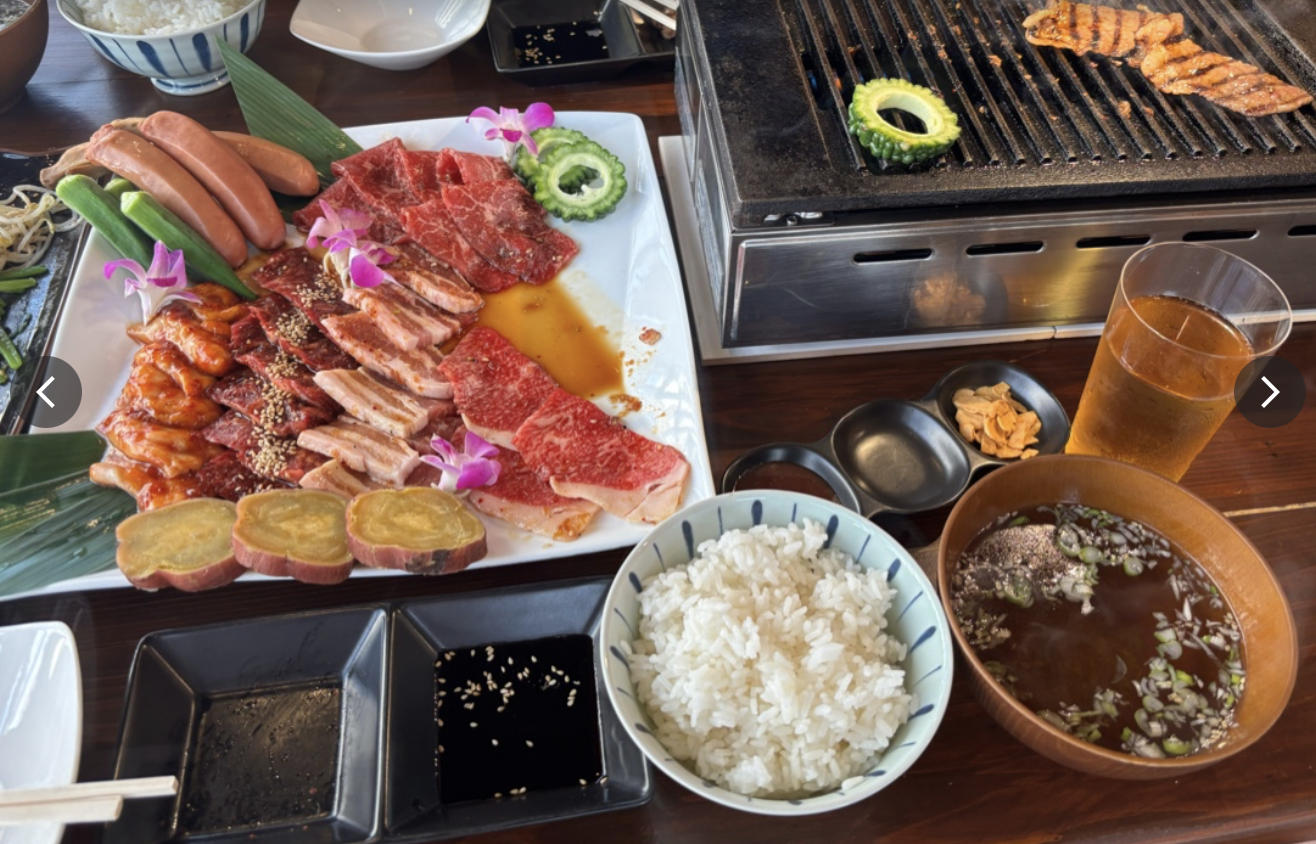
After exploring the charming sheltered market area, we stumbled upon a yakinikui restaurant by the name of “Go Slow” that caught our eye. Time to indulge! The restaurant was tucked away on the second floor. We were pleasantly surprised by the elegant interior. The quality of the Ishigaki wagyu meat was outstanding, and the service was top-notch. Despite our limited Japanese, the staff made us feel right at home.
Ishigaki Wagyu is a highly prized type of beef from Ishigaki Island. Known for its rich marbling, Ishigaki Wagyu has a tender texture and a buttery flavor that melts in the mouth.
After enjoying a delightful lunch, we strolled around town a bit longer before heading to the ferry terminal, where we caught our bus back to the ship. The ride took us along the stunning coast of Ishigaki, offering breathtaking views.
Dinner was at the Teppanyaki restaurant aboard the ship—sticking with the theme! The experience was fantastic; the chefs were incredibly skilled, putting on an entertaining show as they prepared our meal right before our eyes. Their flair for cooking and engaging personalities made the evening even more enjoyable.
After dinner, we relaxed at the Schooner Bar, listening to soothing piano music. There were just a few Americans there, surrounded by a vibrant Asian crowd, adding to the unique atmosphere of the ship.
Here are some terms we learned about the types of Japanese grilling (the restaurant was Yakiniku style):
Yakiniku
– Meaning: Yakiniku translates to “grilled meat” in Japanese.
– Cooking Style: Typically involves grilling bite-sized meat and vegetables over a charcoal grill or gas flame.
– Serving Style: Diners usually grill their own food at the table and often enjoy it with dipping sauces (like tare).
– Common Ingredients: Various cuts of beef (like short ribs), pork, chicken, and vegetables.
Teppanyaki
– Meaning: Teppanyaki translates to “grilled on an iron plate.”
– Cooking Style: Involves cooking on a flat, iron grill (teppan) in front of guests, often accompanied by a chef performing skillful cooking techniques.
– Serving Style: The chef prepares the food in front of diners, showcasing cooking skills with flipping and cutting, and serves it directly from the grill.
– Common Ingredients: A variety of proteins (beef, chicken, seafood) and vegetables, often served with rice or noodles.
Hibachi
– Meaning: Hibachi means “fire bowl” and refers to a traditional Japanese heating device.
– Cooking Style: In the U.S., hibachi usually refers to a small grill used for cooking, which may be charcoal-based, but it’s often confused with teppanyaki.
– Serving Style: Similar to teppanyaki, but often involves a more casual setting, and the focus is primarily on grilling different types of meat and vegetables.
– Common Ingredients: Often includes steak, seafood, and vegetables cooked over an open flame.
Summary
– Yakiniku focuses on grilling various meats and vegetables, often with a DIY element.
– Teppanyaki features a chef cooking on an iron grill, with an emphasis on performance and presentation.
– Hibachi generally refers to a grill (or cooking style) that is more casual and often confused with teppanyaki in Western contexts.