We rose early to a stunning Saturday in Luxor. After enjoying a hearty breakfast, we bid farewell to the Beau Rivage cruise ship and made our way to the Valley of the Kings.
The Valley of the Kings, located near Luxor, is an ancient burial ground for pharaohs and nobles of the New Kingdom (1550–1070 BCE). It features over 60 tombs, including that of Tutankhamun (King Tut), as well as some of the most well-known pharaohs, such as Ramses II, and Seti I. known for their elaborate decorations and religious texts. Chosen for its hidden location, the valley aimed to protect these tombs from grave robbers. Extensive archaeological work has uncovered valuable insights into ancient Egyptian burial practices, with ongoing conservation efforts to preserve this historically significant site.
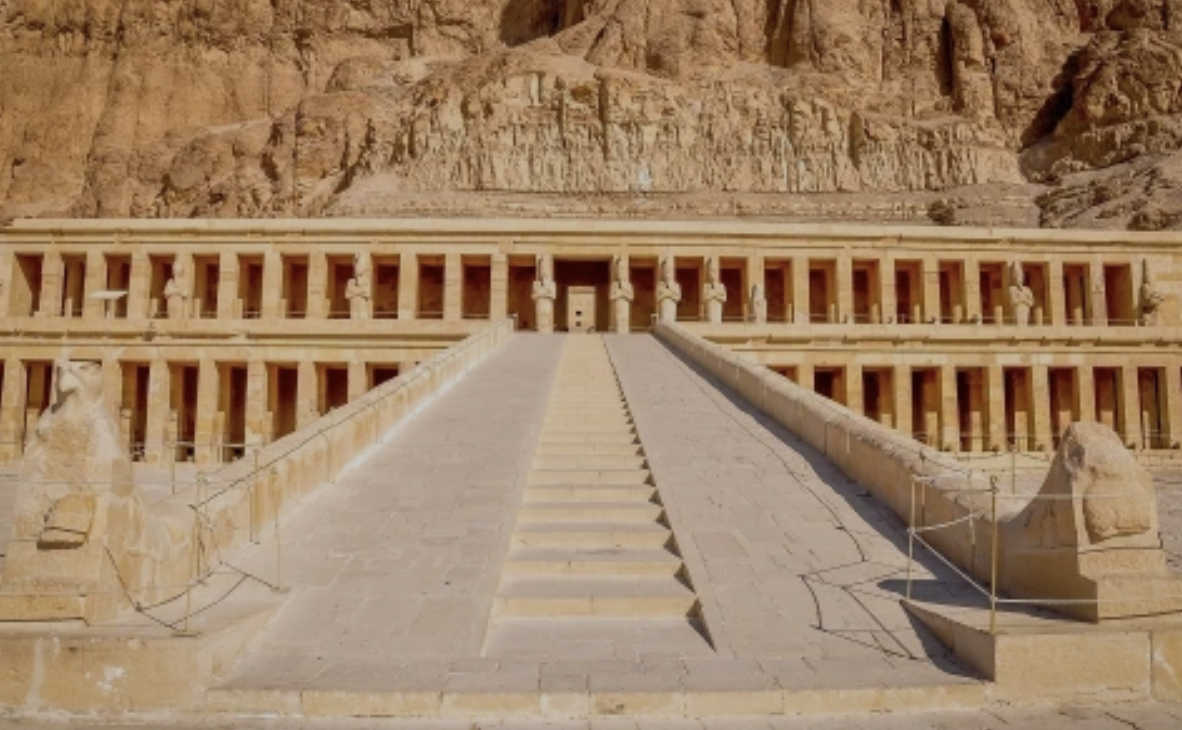
Next we made a brief stop at the Hatshepsut Temple. Queen Hatshepsut, one of ancient Egypt’s few female pharaohs, was buried in her mortuary temple at Deir el-Bahari. Her burial site was initially intended for her but later appropriated by her successor, Thutmose III. The temple is celebrated for its remarkable architectural features and stunning reliefs that illustrate her divine origins and various achievements. This burial location highlights her exceptional status and the architectural innovations of that era.
After visiting the Valley of the Kings and the Hatshepsut Temple, we made our way to the Karnak Temple. The Karnak Temple, located near Luxor, Egypt, is one of the largest religious complexes in the world, dedicated to the sun god Amun-Ra. Built mainly during the New Kingdom (c. 1550–1070 BCE), it features impressive structures like the Great Hypostyle Hall with 134 columns. Renowned for its intricate hieroglyphics and massive statues, Karnak was a key site for ancient Egyptian worship, particularly during the Opet Festival. Today, it is a UNESCO World Heritage site, attracting many visitors.
A nearby café provided a tasting of delightful Egyptian cuisine. Some of us had the opportunity to try the famous national dish, Koshari.
Koshari typically consists of a hearty mixture of rice, lentils, and pasta, topped with a spiced tomato sauce and garnished with fried onions. Some variations may include chickpeas or a drizzle of garlic vinegar for added flavor. Koshari is known for its comforting, filling nature and is commonly served as street food or in casual dining settings. It’s a dish that reflects the diverse culinary influences in Egypt, combining ingredients from different cultures into a single, satisfying meal.
After a brief bus ride from Karnak Temple, we arrived at our next hotel, Jolie Ville Hotel & Spa in Luxor.
The Jolie Ville Hotel & Spa is a luxury resort located on Kings Island, offering beautiful views of the Nile River. It features various amenities including three outdoor pools, a children’s pool, a spa, a swim-up bar and three restaurants.
We concluded our exciting day with a delightful dinner atop the Alsahaby Restaurant in Luxor, where we had a stunning view of the Nile. The meal featured a variety of Egyptian appetizers and dishes, culminating in a selection of exquisite Egyptian pastries, including the renowned Basbousa.