DAY 2
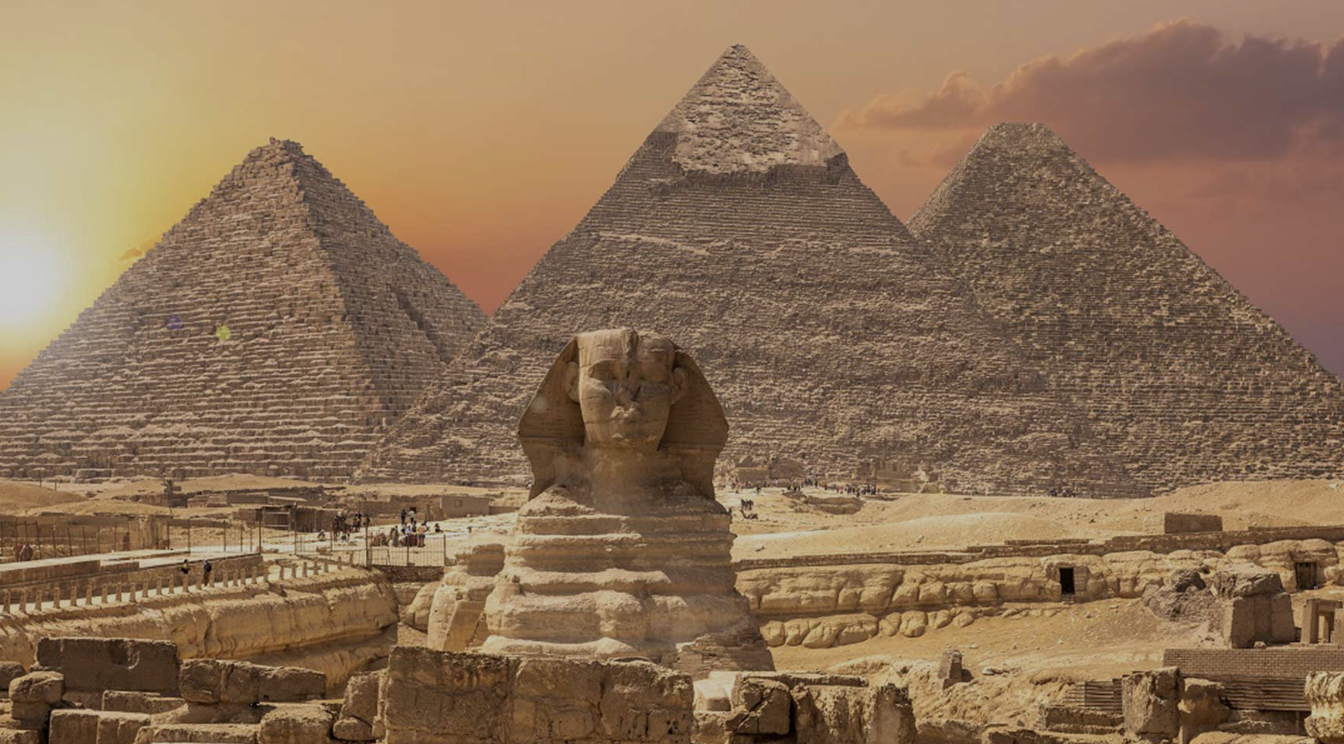
This morning, we enjoyed a fantastic buffet breakfast featuring a variety of dishes from around the globe. It was plentiful and absolutely delicious. Afterward, we boarded our tour bus and made our way to Giza to visit the iconic Pyramids of Giza and the Great Sphinx, renowned as one of the wonders of the world.
The Pyramids of Giza, located on the Giza Plateau near Cairo, Egypt, are among the most iconic symbols of ancient Egypt and are part of a larger complex that includes the Great Sphinx.
1. Great Pyramid of Giza: Built for Pharaoh Khufu (also known as Cheops), the Great Pyramid is the largest of the three and one of the Seven Wonders of the Ancient World. It was constructed around 2580–2560 BC and originally stood at about 481 feet tall. The pyramid was built using an estimated 2.3 million stone blocks, and its precise construction techniques remain a subject of study and fascination.
2. Pyramid of Khafre: The second pyramid belongs to Pharaoh Khafre (Chephren), son of Khufu. It appears taller than the Great Pyramid due to its elevated location, but it is actually slightly shorter. Khafre’s pyramid is uniquely identified by the remnants of the casing stones at its apex, which were originally polished white Tura limestone.
3. Pyramid of Menkaure: The smallest of the three, built for Pharaoh Menkaure. It stands at about 213 feet tall. Despite its size, it is notable for its complex of mortuary temples and smaller satellite pyramids.
4. The Great Sphinx: Located near the pyramids, the Sphinx is a monumental statue with the body of a lion and the head of a human, believed to represent Pharaoh Khafre. The Sphinx measures about 240 feet long and 66 feet high. Its face is thought to bear the likeness of Khafre himself. The Sphinx has undergone numerous restorations over the centuries and remains one of the largest and oldest statues in the world.
These structures not only showcase the architectural and engineering prowess of ancient Egyptians but also reflect their beliefs in the afterlife and the divine nature of their pharaohs.
The next stop was the Saqqara pyramid, specifically the Step Pyramid of Djoser, is one of the most significant archaeological sites in Egypt. Located in the Saqqara necropolis, it was built during the 27th century BCE for Pharaoh Djoser, making it the oldest known pyramid in Egypt and one of the earliest large-scale cut stone constructions in the world.
The pyramid complex is decorated with intricate reliefs and inscriptions that provide insights into ancient Egyptian culture, religion, and burial practices. Saqqara continues to be a critical area for Egyptology, with ongoing excavations revealing more about ancient Egyptian civilization.
We concluded the tour with a late lunch at a restaurant with the namesakes of Egypt’s last king, King Farouk. While enjoying a delicious mixed grill, we took in the beautiful views of a man-made lake.
King Farouk reigned from 1936 until 1952. He ascended the throne at a young age after the death of his father, King Fuad I. His reign was marked by political instability, corruption, and growing discontent among the populace.
Farouk was known for his lavish lifestyle, which included a penchant for luxury cars, extravagant parties, and a significant collection of art and jewels. His rule faced criticism for failing to address pressing social and economic issues, and he struggled to maintain control over a country increasingly influenced by nationalist movements.
In 1952, amid rising tensions and a coup led by the Free Officers Movement, Farouk was forced to abdicate and went into exile in Italy. He died on March 18, 1965, in Rome. His legacy is often viewed through the lens of Egypt’s transition from monarchy to republic, and he remains a controversial figure in Egyptian history.